Multi Jet Fusion
MJFHP Multi Jet FusionHP Jet FusionPBF-LB/P (MJF variant)Tungsten-halogen infrared (IR) lamp spanning the full build platform width (up to 380 mm). HP thermal inkjet printheads deposit fusing agent (carbon-black absorber ink) at cross-section areas and detailing agent (non-fusing fluid) at part boundaries. The IR lamp passes over, absorbing energy preferentially where fusing agent was deposited. No laser required.
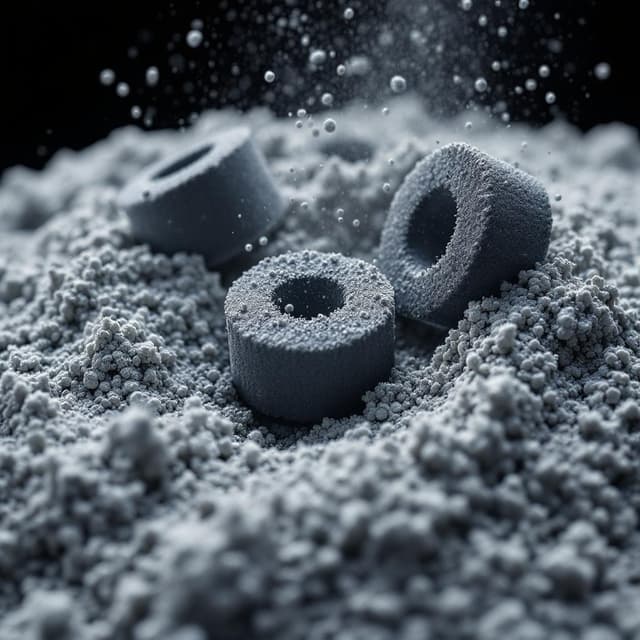
How it works
PA12 powder (or PA11, TPU) is spread in thin layers (~80 µm). An inkjet printhead array simultaneously deposits fusing agent (black ink, high IR absorptivity) at the desired cross-section and detailing agent (clear, low absorptivity) at boundaries and non-part areas. An IR lamp passes over the entire layer, fusing all agent-coated regions simultaneously. This parallel fusing mechanism is significantly faster than laser point-scanning and produces more uniform temperature distribution within each layer. At standard 30% virgin powder refresh rate, HP PA12 achieves near-full theoretical density (1.01 g/cm³) and slightly superior mechanical properties vs SLS PA12.
Parameter envelopes (1 material–machine combinations)
PA12 (Polyamide 12)(HP Jet Fusion 5200)air
Layer thickness
80–80 µm
HP MJF operates at atmospheric conditions (no inert gas required). Build temperature is maintained by the IR lamp profile. Standard 30% virgin refresh rate for production. Layer thickness is fixed at 80 µm on all HP Jet Fusion 5xxx systems. Build rate up to 2500 cm³/h at standard quality mode.
Defect modes (3)
Agent Bleeding / Edge Roughness
Cause
Fusing agent wicking into adjacent unfused powder beyond the intended boundary. More pronounced at coarser powder PSD, higher fusing temperatures, or when detailing agent is insufficient at edges.
Indicator
Dimensional oversize at part boundaries (+0.1–0.3 mm). Rough, fuzzy surface at part edges. Colour bleed in full-colour MJF prints.
Prevention
Unlock the full process details — sign up to additive.tools
Membership · no credit card · no marketing emails. Unlock the full library: 28 articles, 46 materials, 10 processes, 75 papers and more.