additivetools

CoCrMo

metal

cobalt-chromium alloy (biomedical and aerospace grade)

Cobalt-Chromium-MolybdenumUNS R30075ASTM F75 (casting equiv.)ISO 5832-12 (wrought equiv.)EOS Cobalt Chrome MP1Co-28Cr-6Mo
Density
8.29 g/cm³
YS (LPBF as-built (XY))
980–1200 MPa
UTS (LPBF as-built (XY))
1200–1420 MPa
Elongation (LPBF as-built (XY))
2.0–6.0 %
Elastic modulus
195–220 GPa
Thermal conductivity
14.3 W/m·K

Composition — UNS R30075 / ASTM F3213-17

ElementMin %Max %Notes
Cobal.balance
Cr26.0030.000Passivation layer (Cr₂O₃) — drives corrosion and oxidation resistance. Key for biocompatibility.
Mo5.007.000Solid solution strengthening and pitting corrosion resistance in chloride (body fluids)
Ni1.000
Fe0.750
C0.140M₂₃C₆ carbides form at grain boundaries — strengthening but potential sensitisation at elevated temperature
Si1.000
Mn1.000
N0.250Controlled nitrogen stabilises FCC matrix and improves corrosion resistance
W0.200Optional: some dental grades use W for additional solid solution strengthening
P0.020
S0.010

Mechanical & thermal properties — 3 conditions

PropertyLPBF as-built (XY)LPBF as-built (Z)LPBF solution-annealed (XY)
Elastic modulus195–220 GPa
Yield strength (0.2%)980–1200 MPa840–1080 MPa630–780 MPa
Ultimate tensile strength1200–1420 MPa1050–1270 MPa880–1080 MPa
Elongation at break2.0–6.0 %1.0–4.0 %8.0–18.0 %
Hardness (HV)380–480 HV10270–340 HV10
Fatigue strength430–580 MPa
Density8.29 g/cm³
Thermal conductivity14.3 W/m·K
CTE12.8–14.0 µm/m·K
As-built surface Ra8.0–16.0 µm

Values shown as min–max where a spread is reported, otherwise as typical ± unit. Ranges reflect inter-source variation, not single-sample scatter. All values are for AM-processed specimens unless noted.

Engineering considerations

  • Biocompatibility testing: ASTM F3213 covers mechanical and compositional requirements but NOT biocompatibility. ISO 10993-1 cytotoxicity, sensitisation, and genotoxicity testing required for implantable devices.
  • Wear debris: metal-on-metal bearing surfaces (CoCrMo-on-CoCrMo) are under increasing regulatory scrutiny (FDA 2016 guidance). Ceramic-on-CoCrMo or UHMWPE-on-CoCrMo reduces ion release.
  • Surface finish for implants: Ra <0.8 µm for bone cement interfaces; Ra <0.05 µm (mirror polish) for articulating bearing surfaces. Electropolishing achieves Ra ~0.05 µm from as-built Ra ~12 µm.
  • Lattice structures: CoCrMo LPBF lattices (300–600 µm pore size) achieve stiffness matching to trabecular bone (~0.5–3 GPa) — used for spinal cages and metaphyseal sleeves. Strut diameter minimum ~200 µm.
  • Stress relief before part removal: minimum 1000°C/1h (vacuum) recommended to prevent distortion. Parts are highly susceptible to distortion if removed without stress relief.
  • Post-heat-treatment decision: as-built provides optimal wear resistance (hardness 430 HV). Solution anneal (1150°C) improves ductility but sacrifices wear resistance. Choose based on application.
  • Powder safety: cobalt powder is designated as a possible human carcinogen (IARC Group 2B). Vacuum or glove-box powder handling required. Mandatory COSHH assessment before any CoCrMo LPBF operation.
  • Regulatory pathway (EU): Class III medical devices (joint replacements) require CE marking under EU MDR 2017/745 with Notified Body review. AM-specific process validation per ASTM F3407 or equivalent required.

Advantages

  • Highest hardness of any standard AM biomedical metal — superior wear resistance for articulating surfaces
  • Excellent corrosion resistance in physiological environments (body fluids, PBS, Ringer's solution)
  • Biocompatible — ISO 10993 compliant; long clinical track record in cobalt alloy implants
  • High fatigue strength (~500 MPa) — critical for cyclic-loaded implants (hip stems: ~3 million cycles/year)
  • Strong high-temperature properties: retains significant strength to 900°C — aerospace turbine component use
  • Outstanding creep resistance at moderate temperatures
  • Excellent osseointegration potential when surface-roughened (Ra 1–3 µm for bone contact)
  • Non-magnetic — MRI compatible implants possible

Limitations

  • Very low as-built ductility (2.5–6%) — barely meets ASTM F3213 minimum; fatigue-critical implants need rigorous process control
  • Ion release concern: Co²⁺ and Cr³⁺/Cr⁶⁺ ions released from wear debris — regulatory and clinical concern for metal-on-metal bearings
  • Extremely high hardness makes post-machining difficult — hard turning tools, CBN inserts, slow cutting speeds required
  • Dense (8.29 g/cm³) — heaviest common biomedical AM metal; hip implant weight matters for elderly patients
  • Limited LPBF machine compatibility — requires high-power laser (≥400 W) and careful atmosphere control
  • High residual tensile stress in as-built state — mandatory stress relief for fatigue-critical implants
  • Powder handling: Co is classified as a potentially carcinogenic metal — strict COSHH/OSHA inhalation controls mandatory
  • High cost: raw powder 4–6× more expensive than SS316L per kg

Typical applications

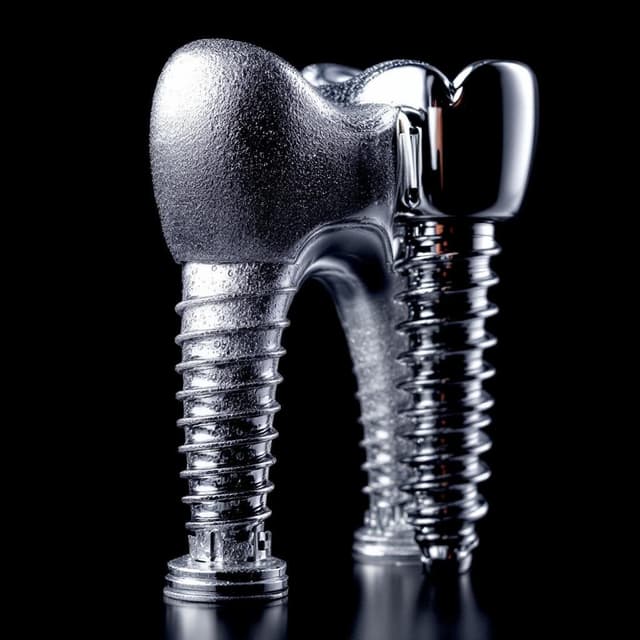
Orthopaedic implants — hip femoral heads, knee bearing tibial insertsDental frameworks, crowns, and bridges (metal-ceramic restorations)Spinal fusion cages and interbody devicesPatient-specific maxillofacial reconstruction platesSurgical instruments requiring high wear resistanceTurbine blades for industrial gas turbines (high-temperature aerospace grade)Rotary instruments (dental drills, cutting burs)Articulating joint surfaces requiring Ra <0.1 µmCustom orthopaedic implants with trabecular lattice structures

Industries

medicaldentalaerospace

Standards & certifications

ASTM-F3213established

CoCrMo (Co-28Cr-6Mo) parts produced by powder bed fusion — composition, powder, and minimum mechanical property requirements

medicaldentalaerospace

YS ≥827 MPa, UTS ≥1172 MPa, El ≥2.5% minimum. Implant parts additionally require ISO 10993 biocompatibility testing.

ISO-5832-12established

Wrought CoCrMo baseline for comparison with LPBF-produced implants

medical

Regulatory bodies (FDA, CE) require LPBF CoCrMo implants to meet or exceed ISO 5832-12 properties.

ASTM-E8established

Tensile test method for acceptance testing

medicaldentalaerospace
ISO-52904established

Process quality assurance for safety-critical PBF parts

medicalaerospace

Compatible AM processes (2)

Other metal materials

Related calculators

Last reviewed: 2026-05-04 · v1 · Sources: ASTM-F3213, ISO-5832-12, eos-cochrmo-2023, murr-2012-cocr, santos-2012-cocr, debroy-2018-review, yadollahi-2017-fatigue, ASTM-E8, ASTM-E466, ISO-52904